
Factory Quality Control
Red Light Therapy Panel Aging Test
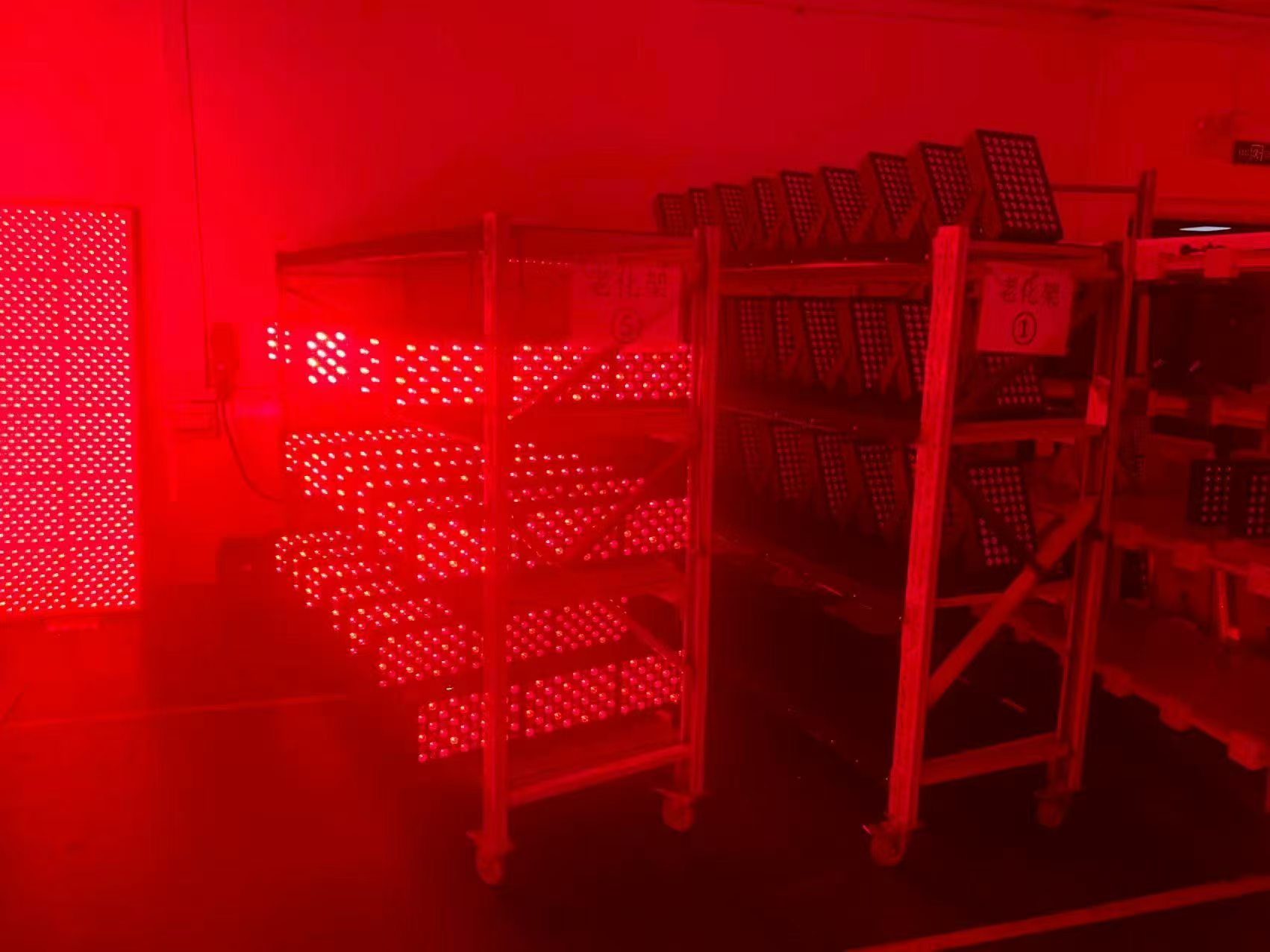
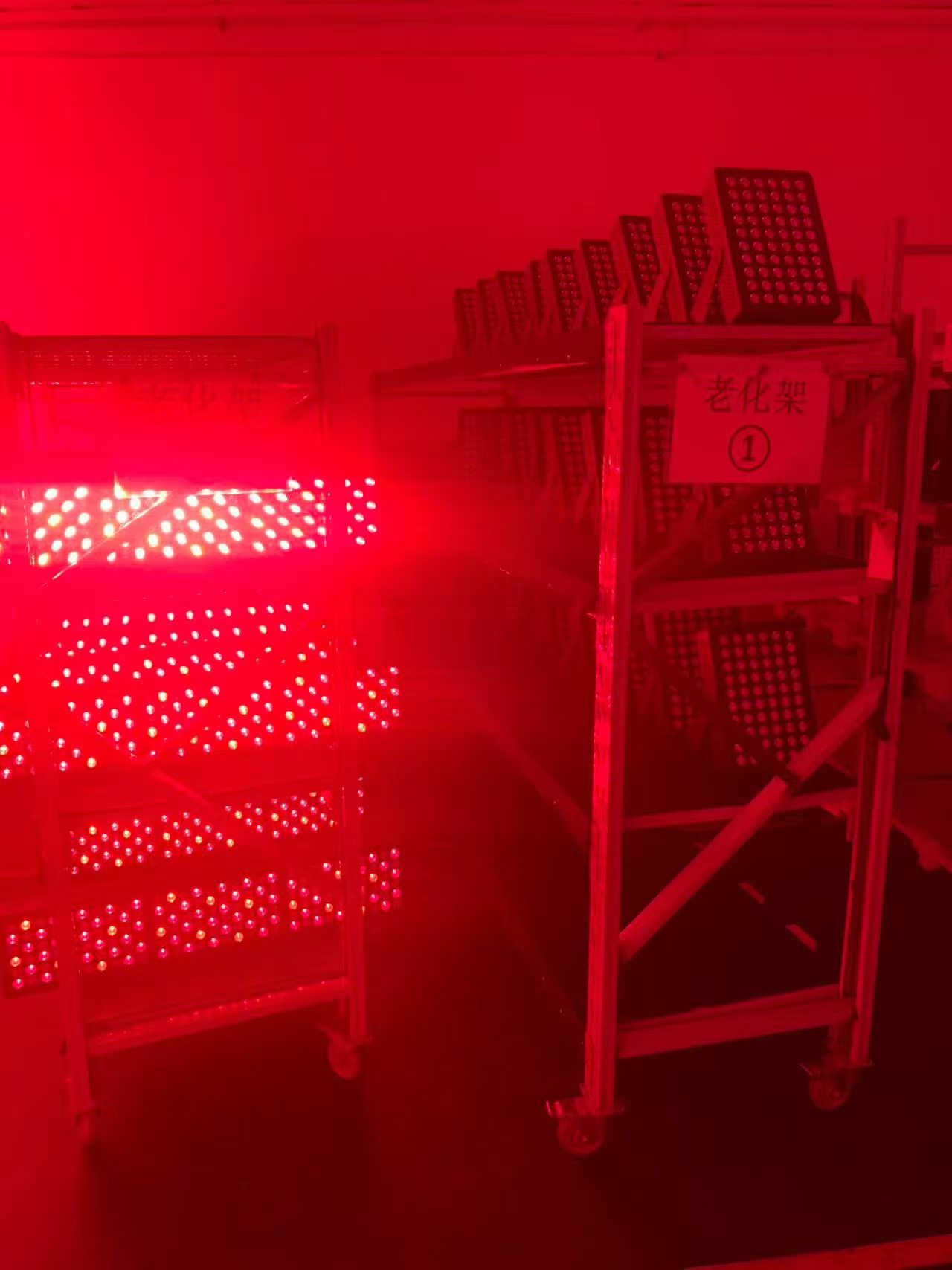
Assembly is not the final step. Every Temilo red light therapy panel completes a 30-minute powered aging test before packing so that early functional, electrical and assembly problems can be identified before shipment.
The short answer
A useful aging process checks every finished unit, records abnormalities, removes failed products from packing and requires repaired units to pass the test again.
What is a red light therapy panel aging test?
An aging test is a controlled operating check performed after assembly. The finished panel remains powered for a defined period while the inspection team observes it under working conditions rather than switching it on for only a few seconds.
This matters because a panel combines LEDs, drivers, power supplies, cooling components, controls and internal connections. A unit may pass a basic power-on check but reveal an intermittent connection, unusual temperature rise, noisy fan or control problem after it has been operating for several minutes.
Why every finished panel is tested
Sampling can be useful for some batch-level checks, but it cannot confirm the operating condition of every individual panel. Temilo therefore applies the aging test to 100% of finished red light therapy panels.
Each unit must complete the operating check before it can proceed to final inspection and packaging. The process is designed to screen for early failures and production inconsistencies. It works alongside material inspection, assembly checks, functional testing and final visual inspection.
What is checked during the 30-minute test
The operator does more than confirm that the lights turn on. The panel is checked as a complete working system.
| Inspection item | What the operator checks |
|---|---|
| LED operation | LEDs illuminate correctly with no visibly dark or abnormal diode. |
| Visible flicker | Light output remains visually stable without abnormal flickering. |
| Cooling fans | Fans start correctly and run without abnormal noise. |
| Temperature rise | The housing and key components show no unusual heat buildup. |
| Power supply | The unit remains powered and stable throughout the test. |
| Controller | Display, buttons and control response operate correctly. |
| Timer | Time settings can be selected and run as intended. |
| Dimming | Brightness levels respond correctly to adjustment. |
| Wavelength switching | Available red, near-infrared and combined modes switch correctly. |
The exact checklist follows the approved model. A basic panel and a multi-wavelength commercial system may have different controls and operating modes.
What happens when a unit does not pass?
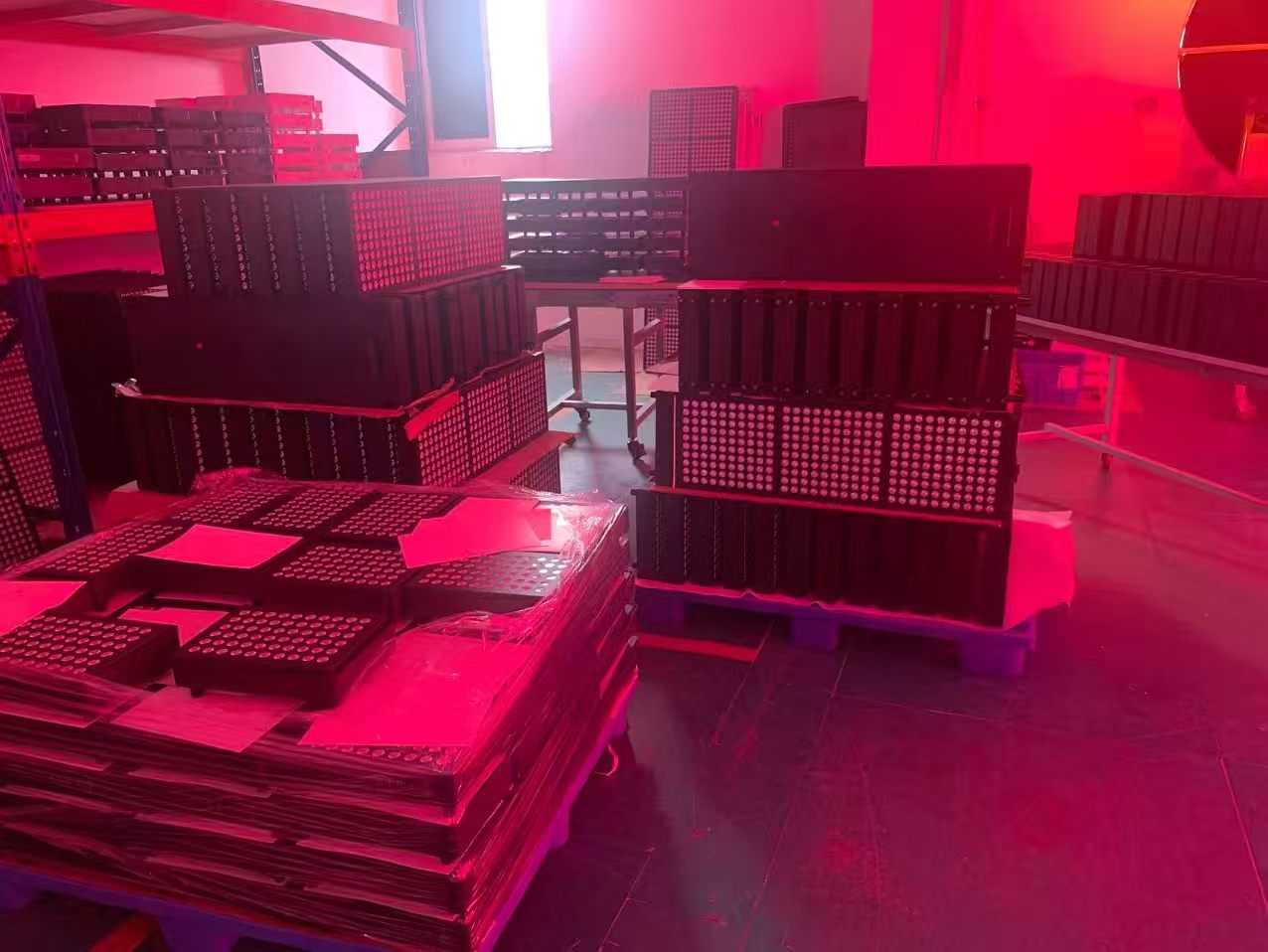
A failed unit is not allowed to move directly into packing. The abnormality is recorded in a paper or electronic inspection record, and the product is removed from the normal packing process.
After the relevant issue has been repaired, the panel must complete the aging test again. It can proceed to final inspection and packing only after it meets the required checks.
- Complete assembly and the initial function check.
- Run the 30-minute aging test.
- Record any abnormality and remove the affected unit.
- Repair and inspect the unit.
- Repeat the aging test.
- Release it for packing only after it passes.
Why inspection records matter
Paper or electronic records connect the physical production process with the approved quality requirements. They support internal traceability and help the factory investigate an issue if a result needs to be reviewed.
Model, production batch and inspection date.
Pass result or the abnormality identified.
Repair status and the action completed.
Repeated aging result before final release.
What a 30-minute aging test does not prove
Production aging is designed to identify early functional and assembly problems. It is not a long-term LED lifetime test, an L70 validation or a third-party certification. Long-term lifetime claims require appropriate component data and standardized reliability testing.
Questions buyers should ask a supplier
- Is every finished panel aged, or only a sample?
- How long does the powered aging test last?
- At what production stage is it performed?
- Which electrical, thermal and control functions are checked?
- What happens when a unit fails?
- Must a repaired unit complete the test again?
- Are paper or electronic inspection records maintained?
- Can the checklist reflect the final OEM configuration?
Aging requirements for OEM and private-label projects
The inspection checklist should follow the approved specification. Relevant items may include wavelength channels, independent or combined operation, brightness range, timer and pulse settings, controller functions, fan configuration, input voltage, customized logo display and linked operation between panels.
These requirements should be confirmed during sampling and carried into production inspection. Photographs can show that an aging area exists, but buyers should also understand whether every unit is tested, what is checked, how failures are handled and whether repaired units are retested.
Planning a red light therapy panel project?
Send us your target panel size, wavelength configuration, destination market, order quantity and branding requirements. Temilo can help review models, customization, sampling and production quality requirements.
This article describes production quality-control procedures. It does not provide medical advice, make treatment claims or represent a third-party certification.