
Red Light Therapy OEM Buyer Guide
Private Label Red Light Therapy Panels: From RFQ to Mass Production
A useful RFQ does more than ask for a catalogue and price. It tells a manufacturer what your brand is building, where the product will be sold and which details must remain consistent when a sample becomes a production order.
This guide explains the decisions buyers should make before requesting a quotation, the evidence worth checking during sample approval and the specifications that should be frozen before mass production.
Why vague RFQs produce vague quotations
“Please send your best red light panel price” is easy to send and difficult to quote correctly. A factory may not know whether the buyer needs a compact home-use model, a full-body panel for a recovery centre, a distributor range with several sizes, or a new private-label platform. Those projects can require different housings, controls, accessories, documents and packaging.
The result is often a low initial price that does not include the final wavelength plan, plug standard, stand, packaging, certification direction or branding work. A stronger RFQ makes competing quotations easier to compare and reduces specification changes after sampling.
Start with the commercial brief
Before discussing LEDs, describe the customer, sales channel, target market, expected price position and intended product range. A premium recovery studio and a direct-to-consumer home wellness brand may choose different controls, installation options and service parts even when the panel dimensions are similar.
The information a manufacturer needs before quoting
Country and sales channel
Confirm where the product will be sold and whether it is intended for e-commerce, distribution, gyms, recovery centres, wellness studios or another commercial channel.
Panel size and use case
State whether you need desktop, half-body, full-body or linked panels, plus the preferred mounting method, stand or door-hanging arrangement.
Wavelength and control direction
List the required wavelength combination, independent channel control, dimming, timer, pulse options, remote control or app direction.
Private-label scope
Separate logo work from deeper changes such as housing colour, interface, firmware, accessories, packaging, manuals, labels and startup screen.
Target documents
Tell the supplier which market and sales claims you plan to use. Ask which reports apply to the exact model and configuration rather than assuming one certificate covers an entire range.
Sample and order plan
Provide an honest first-order estimate, annual forecast and launch timing. MOQ, tooling, packaging and component planning depend on customization depth.
Build a specification sheet that can survive mass production
A catalogue page is not a production specification. Before approving a sample, convert the agreed product into a controlled specification sheet. It should identify not only what the panel looks like, but also how its performance is defined and measured.
| Specification area | What to confirm | Why it matters |
|---|---|---|
| Optical configuration | Wavelengths, LED arrangement, chip configuration, beam angle and channel ratio | Two panels with the same wavelength list can deliver different coverage and user experience. |
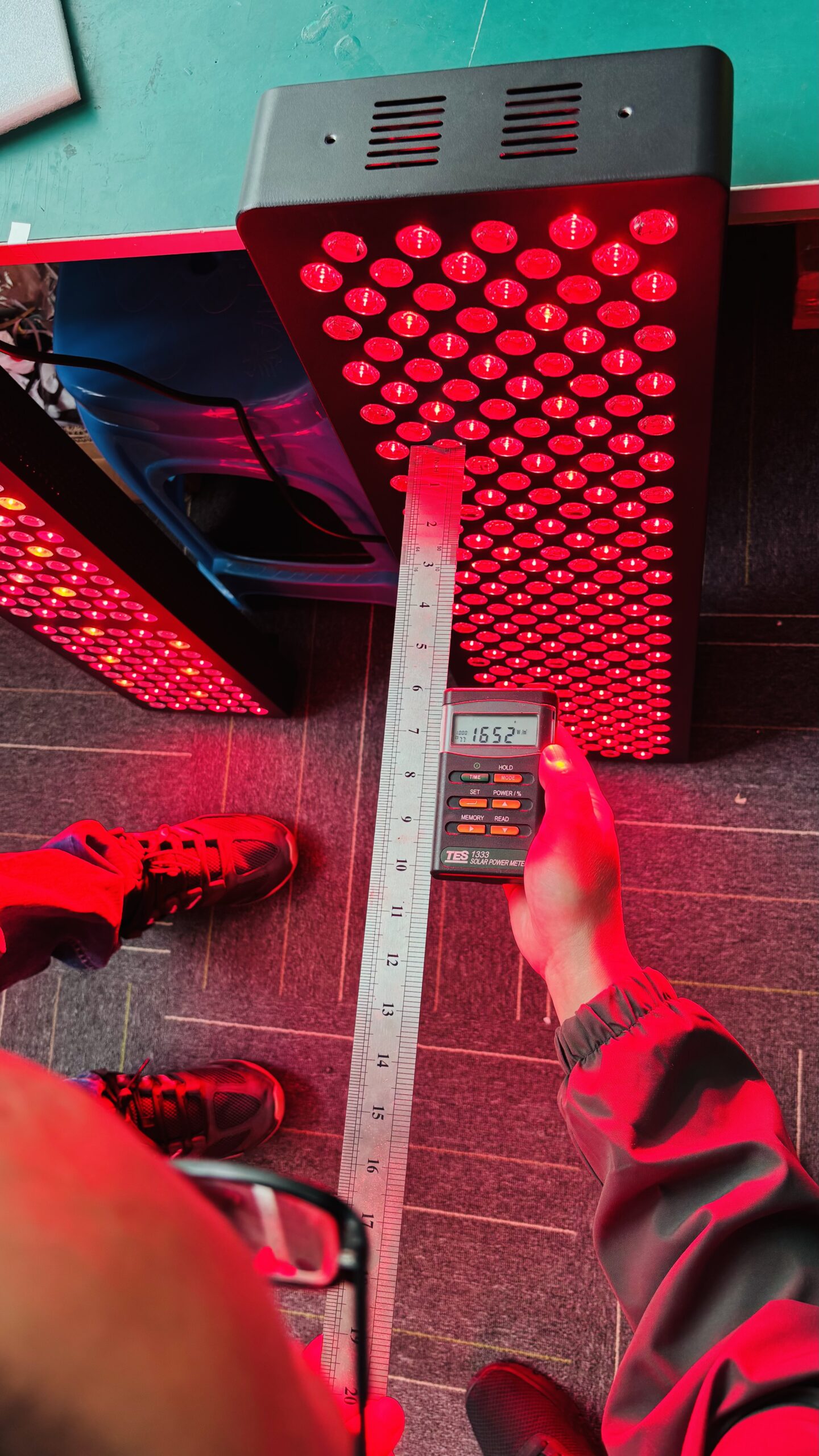
| Irradiance | Unit, distance, measurement device, test position, operating mode and whether the figure is average or peak | A number without a method cannot be compared fairly. |
| Electrical | Input voltage, plug, rated power, measured power, driver and power-cord requirements | Supports market suitability, heat management and installation planning. |
| Controls | Timer, dimming, channel selection, pulse settings, remote, linking and memory behaviour | These details shape daily use and generate many avoidable after-sales questions. |
| Mechanical | Dimensions, weight, material, finish, ventilation, mounting points and accessory compatibility | Important for shipping, room layout, stands and multi-panel systems. |
| Branding | Logo size and position, colour reference, label artwork, manual version and packaging files | Prevents old artwork or unapproved branding from entering production. |
What to verify on the sample
The sample stage should answer technical and commercial questions, not simply confirm that the lights turn on. Create a written approval record and note the operating mode used for every measurement.
Practical sample approval checklist
- Check the model, dimensions, finish, logo position, label and included accessories.
- Operate every control: power, timer, dimming, wavelength selection, pulse mode, remote and linking functions where applicable.
- Record actual power and confirm voltage and plug configuration.
- Measure irradiance at fixed distances and defined positions using the same method you will use for future comparisons.
- Observe fan noise, airflow and housing temperature during a complete operating cycle.
- Review the manual, carton, protective packaging and accessory list as part of the product, not as an afterthought.
- List all approved deviations and changes in a final signed specification rather than relying on chat history.
Freeze the approved configuration before placing the order
Once the sample is accepted, the next step is not merely to write a purchase order. The buyer and manufacturer should freeze the bill of materials direction, approved sample, firmware or controller behaviour, artwork, accessories, packaging and inspection requirements. Any allowed substitutions should be stated in writing.
This is especially important when a product has several wavelength plans or optional controls. A model number alone may not distinguish your approved configuration from another version sold by the same factory.
Ask how production consistency is controlled
Buyers often spend most of their time comparing sample performance. The more important question is how the supplier keeps a production batch aligned with that sample. Ask where incoming components are checked, how assembly inspections are recorded, which functions are tested and what happens when a unit fails.
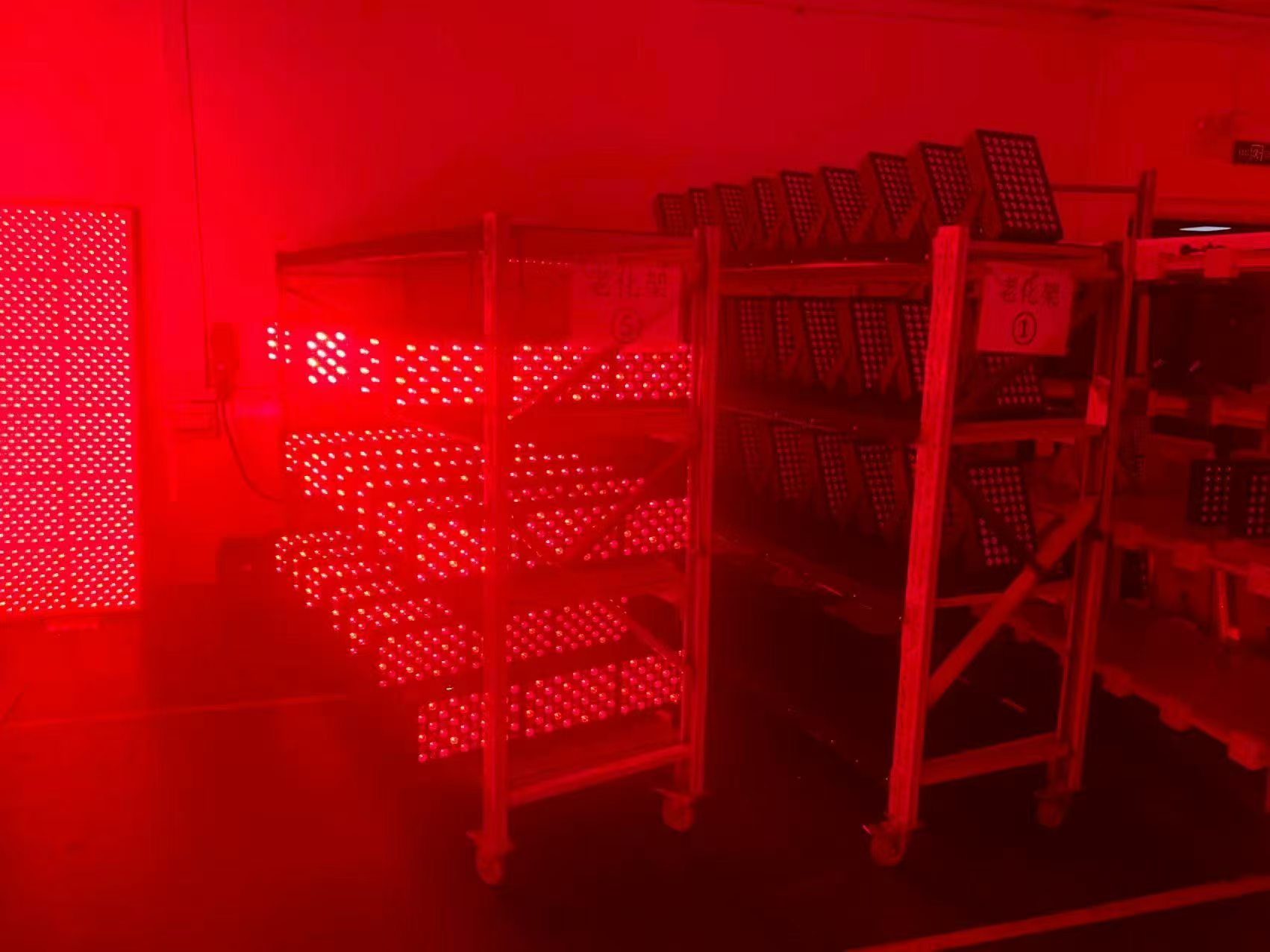
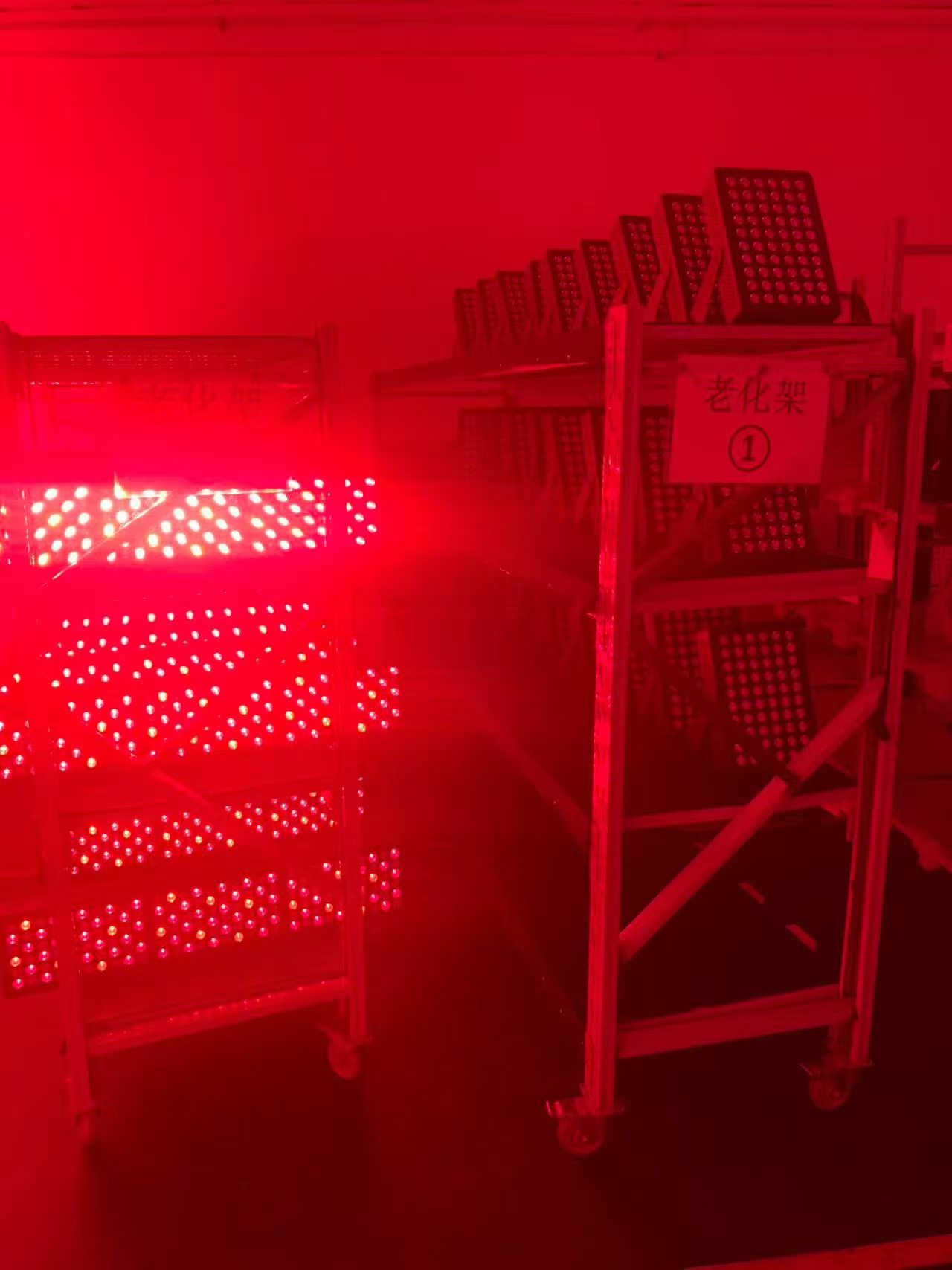
At Temilo, every red light therapy unit completes a 30-minute aging test before packing. The inspection covers LEDs, visible flicker, fans, temperature rise, power supply, controller, timer, dimming and wavelength switching. Non-conforming units are logged for repair and complete aging again after rework. Paper or electronic inspection records can be maintained according to the production arrangement.
Private label and ODM are different project levels
Private label is appropriate when a brand wants a proven platform with its own logo, colour, manual, packaging and accessory bundle. It is usually the faster route to market. Modified OEM projects may add wavelength changes, controller functions or structural adjustments. Full ODM can involve new housing, tooling, firmware, app direction and a product platform developed around the brand.
These levels should not share one assumed MOQ or timeline. The right route depends on how much differentiation the market requires and which changes create genuine value for the buyer’s customer.
Seven questions to put in the RFQ
- Which existing model best matches our target use case, and which specifications can be changed?
- How are irradiance figures measured, and can you provide the distance, meter and test mode?
- Which documents apply to the exact quoted model and electrical configuration?
- What is included in the quoted price, and which items are optional?
- What sample changes require new testing, tooling or MOQ?
- How are approved components, artwork and controller settings controlled during production?
- What pre-shipment inspection records, spare parts and after-sales support can be arranged?
A better RFQ shortens the project
A detailed request does not slow sourcing down. It removes the uncertainty that causes repeated quotations, unsuitable samples and late-stage changes. The strongest buyer–factory projects start with a commercial brief, convert the selected product into a measurable specification and keep the approved version under control through production.
Planning a private-label red light therapy range?
Send your target market, preferred panel size, wavelength direction, estimated quantity and branding scope. Temilo can recommend a suitable private-label or ODM development route.