
Compression Boots OEM Buyer Guide
Build the specification before you compare prices.
Air compression boots can look similar in a catalogue while delivering a very different fit, pressure sequence and control experience. For an OEM buyer, chamber design, pressure logic and controller behaviour must be defined together.
This guide explains the product decisions worth fixing before sample approval and mass production.
Why chamber count alone is not a specification
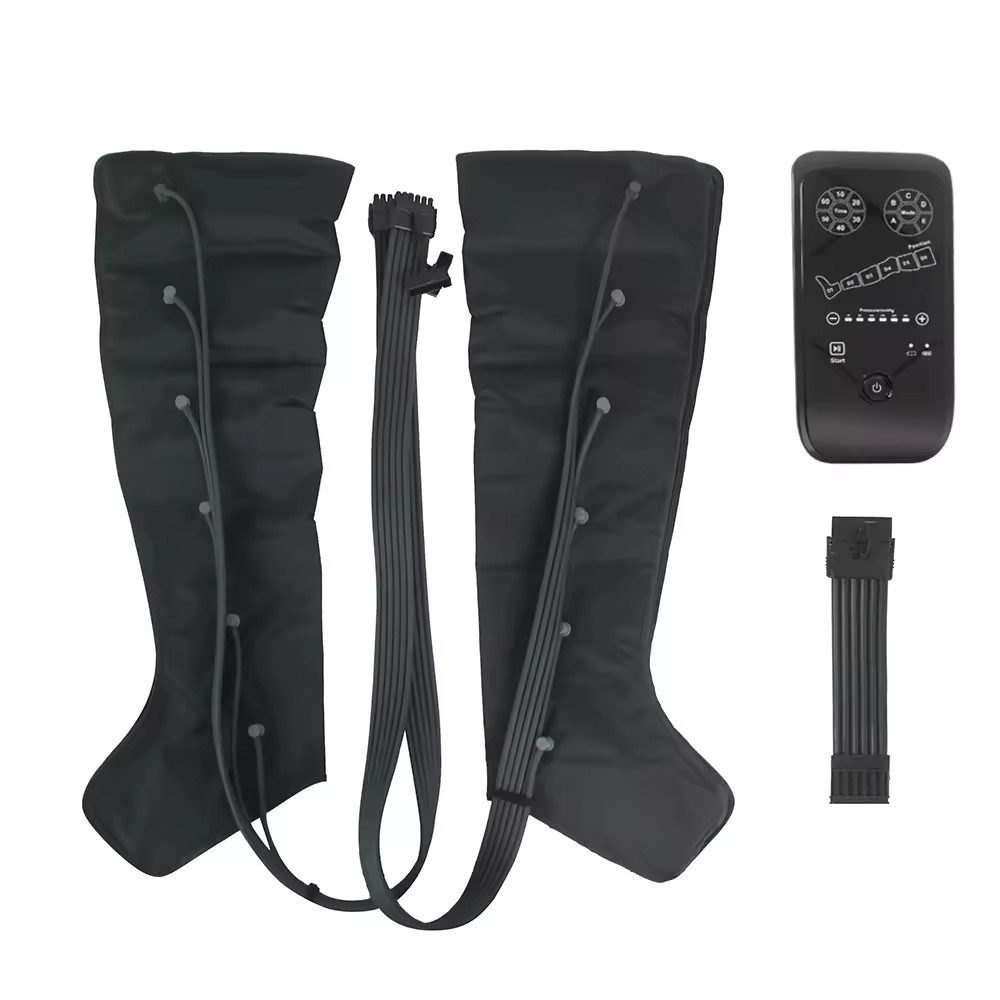
Buyers often begin by asking whether a boot has four, six or eight chambers. The number is useful, but it does not explain how the garment feels or how pressure moves along the leg. Chamber length, overlap, garment shape, hose routing and the inflation program all influence the result.
Two six-chamber systems may behave differently if one inflates a single zone at a time while another holds pressure in previous zones. A quotation should therefore identify both the physical chamber structure and the programmed sequence.
Define the user and setting first
A portable home recovery product, a premium gym system and a device used repeatedly in a commercial studio do not have identical priorities. Portability, battery operation, session setup, garment cleaning, controller durability and accessory replacement should follow the intended use case.
1. Specify chamber geometry and overlap
Chambers should cover the intended area without leaving unplanned gaps between pressure zones. Overlap can help create a smoother transition, but the pattern must work with the garment construction and inflation sequence. Ask for a chamber layout drawing or a clearly labelled sample rather than relying only on exterior photos.
Where does compression begin and end?
Check the foot, ankle, calf, knee and thigh areas against the target garment length and user profile.
How do adjacent zones interact?
Confirm overlap, inflation order and whether earlier chambers release or remain inflated as the next zone starts.
How is leg size accommodated?
Review circumference range, zipper or fastening design, extension pieces and left/right labelling.
How are hoses organised?
Evaluate connector orientation, tube length, strain relief and how quickly users can set up the system.
2. Treat pressure range as only one part of the control system
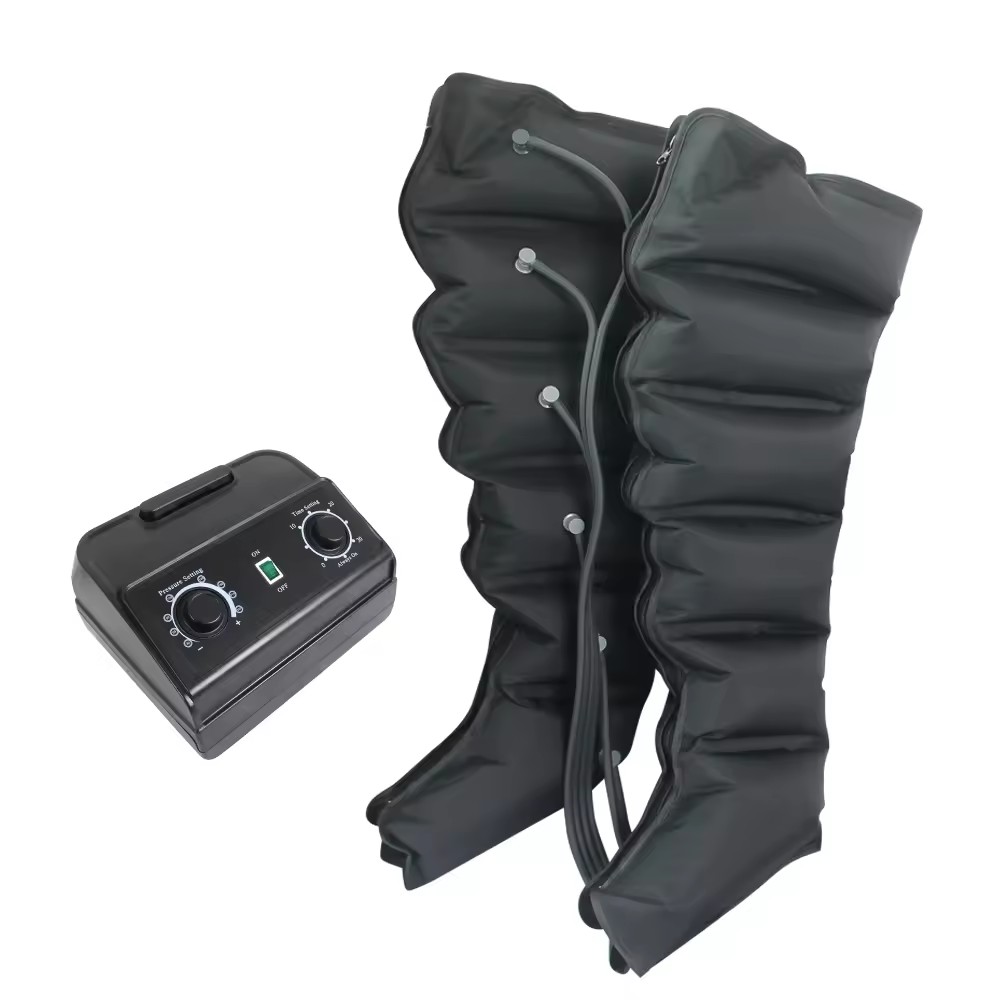
A broad pressure range can sound impressive, but the useful questions are more practical: how many adjustment steps are available, how accurately the controller reaches the selected level, whether zones can be disabled, and how the product behaves if the garment fit changes.
When reviewing a sample, record the controller setting and measure each chamber under the same test condition. Repeat the sequence several times. Consistency between cycles matters more than one isolated reading.
| Control item | Buyer decision | Sample check |
|---|---|---|
| Pressure range | Choose a range appropriate to the target product and user instructions. | Compare displayed settings with measured chamber pressure under a defined setup. |
| Adjustment steps | Decide whether users need simple levels or finer numeric adjustment. | Confirm every step changes predictably and is easy to understand. |
| Session time | Define preset durations, manual adjustment and end-of-session behaviour. | Check timer accuracy, pause, restart and automatic deflation. |
| Zone control | Decide whether individual chambers can be skipped or disabled. | Verify the selected zones remain consistent after changing modes. |
| Memory | Choose whether the controller should remember the previous session. | Power-cycle the unit and confirm the agreed startup state. |
3. Write the inflation program in plain language
Mode names such as sequence, circulation or massage are not enough for OEM approval. Write down what each program actually does: which chamber inflates first, whether previous chambers hold, when pressure releases and how long the cycle pauses before repeating.
A simple mode diagram is useful for packaging, manuals, customer support and factory testing. It also prevents a firmware change from being treated as a cosmetic update.
Controller approval checklist
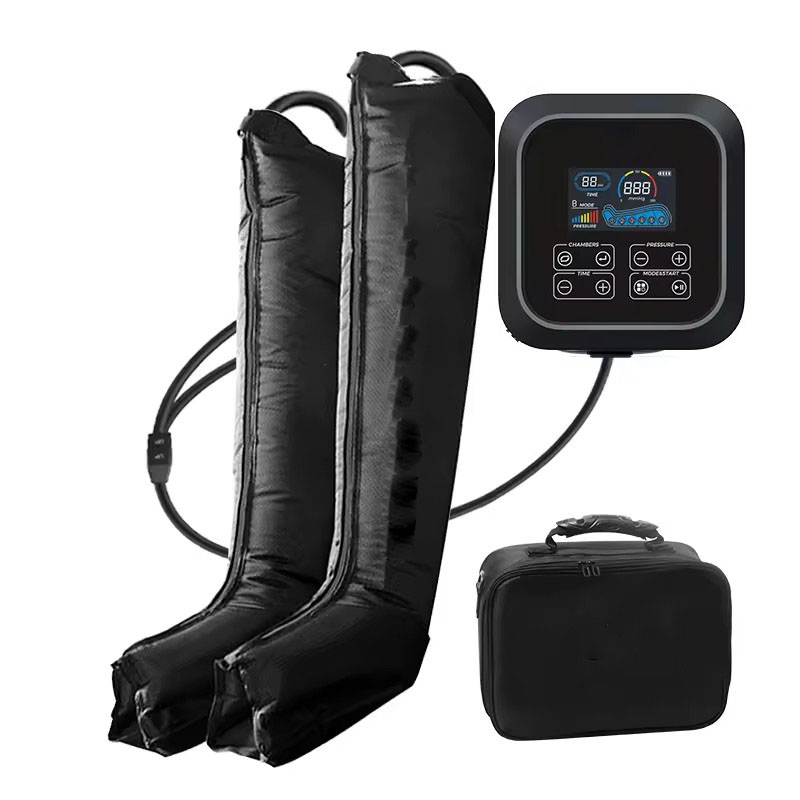
- Button labels, icons, language and display brightness are approved.
- Default pressure, time and mode match the written specification.
- Each mode has a documented chamber sequence.
- Pause, power loss, error and session-complete behaviour are defined.
- Battery indicator and charging behaviour are checked where applicable.
- App, remote or wireless functions are tested across the intended workflow if included.
4. Garment construction affects fit and after-sales performance
The textile assembly is not secondary to the pump. Examine fabric hand feel, lining, seam consistency, zipper operation, edge binding, hose attachment and the way the garment folds for storage. A strong controller cannot compensate for poor fit or inconsistent garment construction.
For private-label projects, approve a size chart and measurement method. State whether sizes refer to garment length, user height, inseam or circumference. Clear sizing reduces returns and prevents distributors from creating conflicting recommendations.
5. Validate the complete pneumatic system
Testing should cover the pump, valves, hoses, connectors and garments together. Leak checks, repeated inflation cycles and connector pull checks help reveal problems that may not appear during a short showroom demonstration. The sample should also be operated long enough to observe controller temperature, pump sound and session-to-session stability.
6. Freeze a version-controlled sample
Before the first production order, create one approved specification that connects the garment, controller, firmware, hoses, connectors, charger, carry bag, labels, manual and carton. Record model names and artwork versions. If the controller program changes after sampling, identify the new version instead of treating it as the same product.
This approval package gives purchasing, production and inspection teams the same reference. It also makes future reorders easier to audit.
Questions to include in a compression boots RFQ
- What chamber structures and garment lengths are available for our target users?
- How do the chambers overlap, and how does each operating mode inflate and release them?
- What pressure range and adjustment steps can be configured?
- Can individual zones, timer settings, startup defaults or mode names be customized?
- Which controller, battery, charger and plug options suit our target market?
- How are leaks, pressure accuracy, valves, connectors and controller functions checked in production?
- Which parts can be supplied for after-sales service, and how are product versions recorded?
Compare systems, not isolated specifications
The best OEM decision does not come from selecting the highest chamber count or widest pressure range. It comes from matching the garment, pneumatic circuit and controller program to a clear customer and channel. When those elements are documented together, quotations become easier to compare, samples are easier to approve and production quality is easier to control.
Developing a private-label compression boots range?
Send your target market, chamber direction, pressure requirements, estimated quantity and branding scope. Temilo can recommend a suitable private-label or ODM route.