
COMMERCIAL ICE BATH BUYER GUIDE
How to Choose an Ice Bath Chiller for Your Business
A practical guide to tub size, cooling conditions, water circulation, filtration and installation for recovery centres, gyms, hotels, spas and private-label wellness brands.
Start with the way the system will be used
An ice bath system for a private home and one used throughout the day in a recovery centre are not the same purchasing decision. The tub may look similar, but the workload placed on the chiller, pump and filtration system can be very different.
Before comparing product sheets, define the water volume, target temperature, room conditions and expected number of sessions. These details give a supplier a much better basis for recommending a configuration than horsepower alone.
Seven points to check before selecting a chiller
The chiller must work with the actual filled volume, not only the tub’s external dimensions. Larger tubs contain more thermal mass and generally need more time to cool.
A system installed outdoors in summer faces a different load from one used in an air-conditioned studio. Direct sunlight and limited ventilation can also reduce performance.
Each user adds heat to the water. Commercial buyers should consider the number of sessions, time between users and whether the system must hold temperature all day.
An insulated tub and fitted cover reduce heat gain and help the chiller maintain temperature more efficiently.
Flow rate affects heat exchange and filtration. The pump, hoses, fittings and filter must work as one system without restricting circulation.
Filtration, ozone and UV can support water management, but they do not replace routine cleaning, water checks and a maintenance plan appropriate to local requirements.
Confirm voltage, current, plug type, ventilation clearance, drainage access and connector size before the equipment arrives.
Match the tub and chiller as a complete system
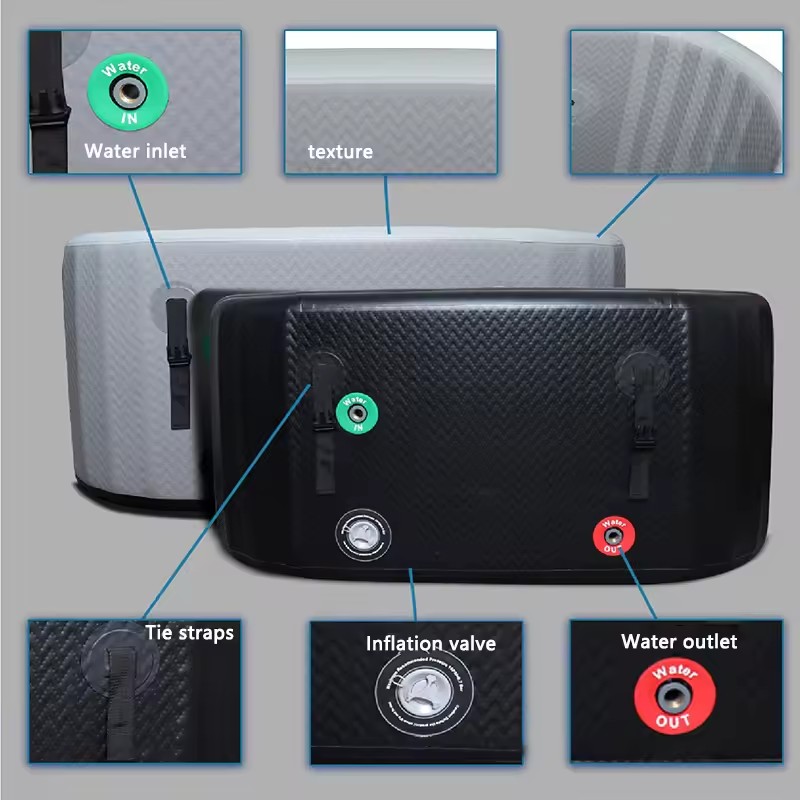
A reliable setup depends on more than the cooling unit. Tub capacity, hose routing, connector compatibility, pump flow and filter resistance all affect operation. For private-label projects, it is useful to evaluate the tub and chiller together rather than sourcing each part independently.
| Tub option | Approx. water volume | External dimensions | Points to confirm |
|---|---|---|---|
| Version A | 380 L | 135 × 80 × 65 cm | Location, target temperature and daily users |
| Version B | 420 L | 150 × 80 × 65 cm | Floor space, access and drainage |
| Version C | 500 L | 170 × 80 × 65 cm | Commercial workload, ambient conditions and insulation |
Tub capacity alone does not determine cooling time. Final recommendations should account for the full operating environment.
Example chiller configuration
One available Temilo configuration combines cold and warm temperature control with an integrated pump, filter, ozone, UV and Wi-Fi control. It uses R290 refrigerant and connects to the tub through two 1/2-inch male-thread water ports.
This is a reference configuration, not a universal recommendation for every installation. Voltage, plug type and the final tub-and-chiller combination should be confirmed for the destination market.
| Voltage | 110 V | Rated power | 1000 W |
|---|---|---|---|
| Rated current | 9.1 A | Refrigerating capacity | 7950 BTU |
| Water flow | 1560 L/h | Connection | 1/2-inch male thread |
| Included hoses | Two 150 cm hoses | Refrigerant | R290 |
Installation and first start-up
The chiller should be installed where air can circulate around the unit and where the hoses can run without sharp bends. Connect the inlet and outlet correctly, open the water valves and allow water to enter the filter and pump before switching on the equipment. The exact priming procedure should follow the manual supplied with the final model.
A useful installation demonstration should show the protective plugs being removed, the hoses connected, the valves opened, water entering the filter and the temperature being set from the control panel. This helps distributors and commercial operators understand the full setup rather than seeing only a finished product photograph.
Questions buyers should ask a supplier
- What were the water volume, starting temperature and room temperature during testing?
- How does the system perform during repeated commercial sessions?
- Are the pump, filter and fittings matched to the chiller?
- What ventilation clearance is required?
- Which voltage, plug and electrical protection are needed?
- How often should the filter be cleaned or replaced?
- Which parts are covered by the warranty?
- Are spare parts and technical support available?
- Which certifications are available for the destination market?
- Can the tub, housing, control panel, packaging and manuals be customized?
Plan the OEM project beyond the logo
Branding is only one part of an OEM project. Buyers should also confirm the product configuration, target-market requirements, packaging method, manuals, accessories, inspection standards and spare-parts plan before approving a sample.
Temilo supports matching tubs and chillers, logo and color customization, packaging development and commercial order planning. Batch production should follow an approved sample and a clearly documented specification.
Planning an ice bath product line?
Send us your target market, tub size, expected daily usage, voltage and branding requirements. We can help compare suitable configurations for your project.